You might be ready to dress modest but stuck between an abaya and a hijab. You’re not alone because these words sound alike yet mean different things. I’ll break them down so you know exactly what to wear and when to wear it.
What’s a hijab?
A hijab is a head covering that conceals the hair, neck, and sometimes shoulders while leaving the face visible. Women in public or mixed settings wear it as part of modest dress and is widely seen as a religious requirement.
A hijab is usually a scarf. You wrap it around your head and secure it so no hair shows. Many women pick soft cotton or chiffon to make sure it stays light and easy to adjust through the day.
What’s an abaya?
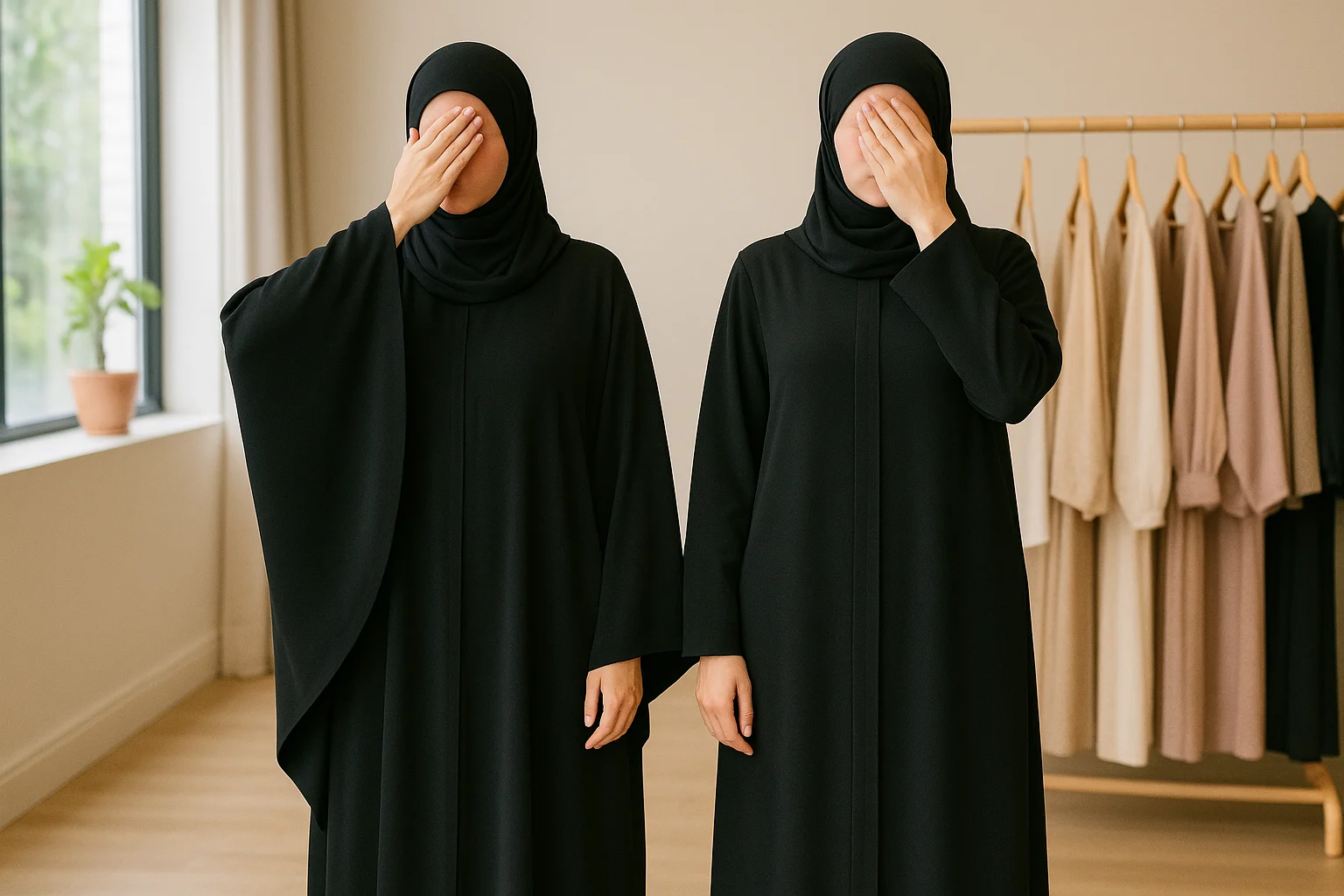
An abaya is a loose outer garment that covers your body from shoulders to feet and is often worn over regular clothes. It’s common in Gulf countries and seen as a cultural way to maintain modesty.
You wear an abaya like a coat. It slides over what you already have on and drapes without showing your shape. Most abayas are black, but you now find them in sage green, mauve, or maroon, giving you style without losing modesty. Soft tones like ice blue or blush work well for events or daily wear when you want a lighter look.
What’s the difference between an abaya and a hijab?
The difference between an abaya and a hijab is simple. A hijab covers only your head and neck, while an abaya covers your entire body except your face, hands, and feet. Hijab is tied to religion while abaya is tied to culture.
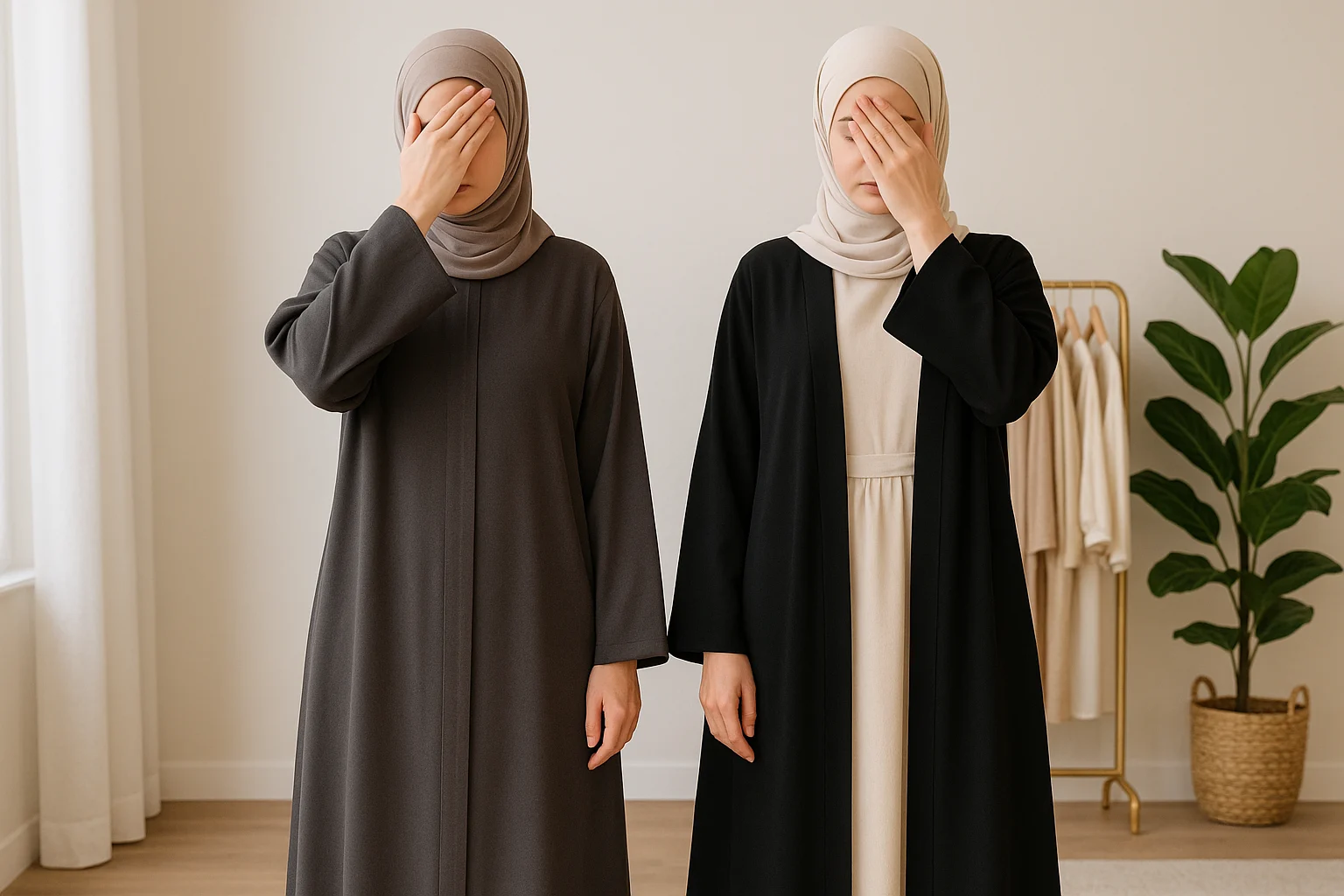
When you step outside, you might wear both together. Your hijab covers your hair and your abaya covers your clothes, making sure you follow modesty rules fully. If you wear a hijab without an abaya, you still meet the requirement for head covering but not the full-body look some regions expect.
When do you wear each one?
You wear a hijab whenever you’re around men who aren’t family, while you wear an abaya mainly outdoors or in public spaces for added coverage. Both can be worn together depending on local customs.
In many places, a hijab alone is enough when paired with modest clothing. In some Gulf countries, an abaya is almost always added because people see it as respectful and proper. Look around and match what women in that place are doing.
Quick summary table
| Garment | Covers | Required by religion? | Main use |
|---|---|---|---|
| Hijab | Hair, neck, sometimes shoulders | Yes, in most teachings | Daily head covering in public |
| Abaya | Shoulders down to feet | No, cultural choice | Outer layer for modesty |
How do they work together?
An abaya and hijab work together to cover different parts of the body, creating a complete and modest look. One takes care of your head while the other takes care of your shape and clothing.
Think of it like a team. The hijab is your top layer, neat and secure around your head. The abaya flows over you like a shield, hiding curves and bright clothes underneath. Many women choose designer abayas that complement their hijab style, ensuring the outfit feels coordinated and still adheres to modest dress rules.
Final thoughts
You now know the clear difference between an abaya and a hijab. A hijab is for your head and neck. An abaya is for your body. Wearing both or one depends on your location and the level of coverage you require. Pick what suits your comfort and your surroundings, and you’ll feel confident every time you step out.